Four Rivers Circle

Cultural authenticity improves the story!

Before your production misnames, misattributes, misconstrues, or misrepresents a society, get help.
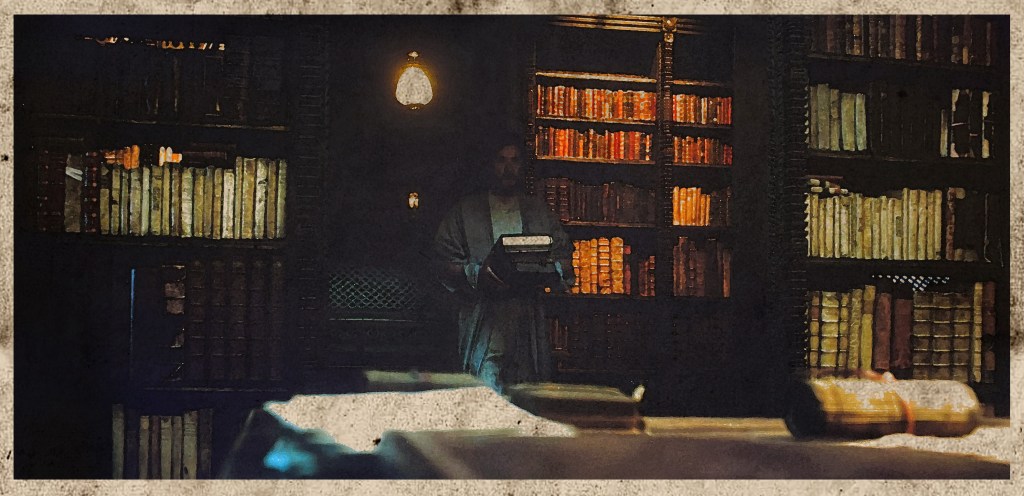
In this blockbuster from the Marvel Cinematic Universe, the protagonist’s quest takes him to a hermitage in Nepal where he studies the mystic arts…except that the hermitage library is stocked only with codices, many of them leather-bound, the occasional Chinese bamboo slip scroll notwithstanding. Yet, neither the codex nor the rolex (scroll) is the typical format for Himalayan books.
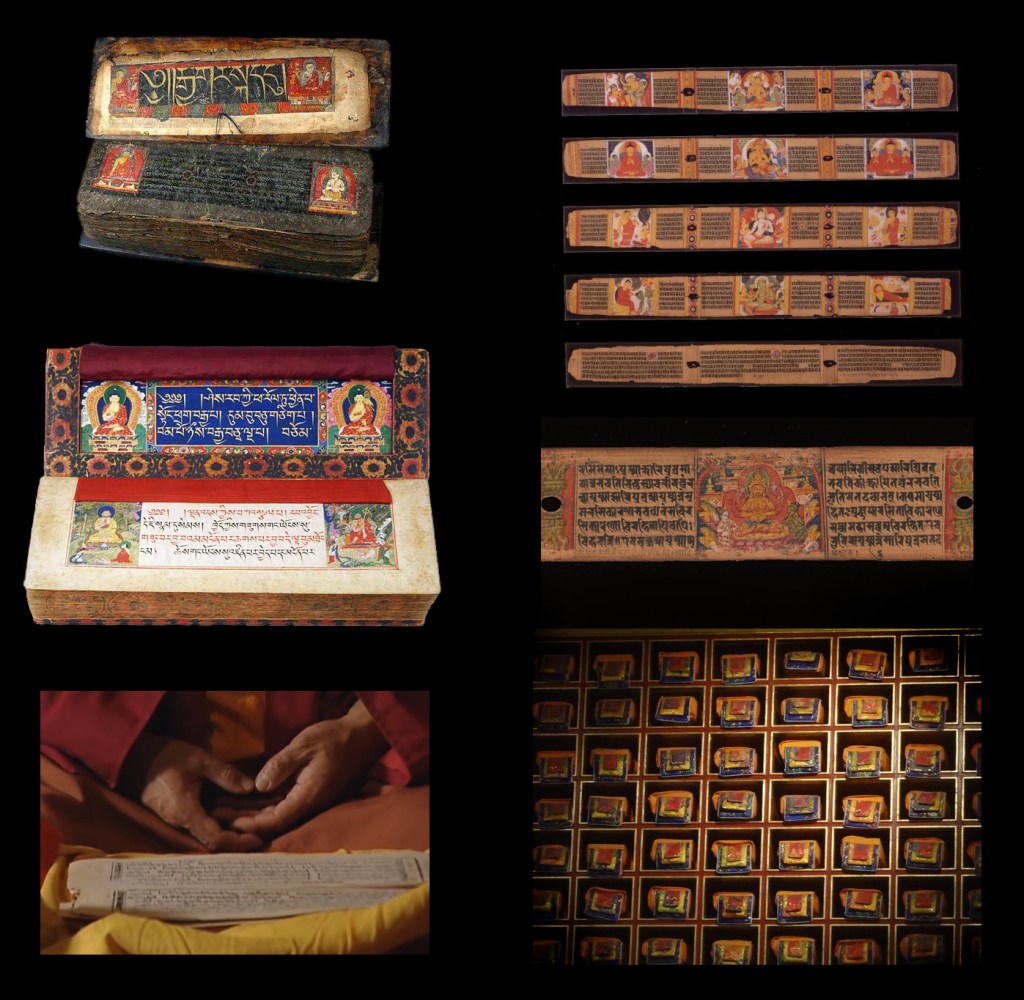
Himalayan pecha manuscripts are made in a horizontal format and are either looseleaf or bound by long cords through the center of each page. Their covers are made of carved and painted wood (not illustrated here). Even when their pages are made of paper, the format of these books is that of Indian palm-leaf manuscripts from which Himalayan people studied and adopted Hinduism and Buddhism. The Tibetan alphabet was derived from Sanskrit, the main language used to write and transcribe palm-leaf books in northern India. When not in use, pecha manuscripts were tied closed with their binding cords, wrapped in silk, tagged and shelved in cubbies (seen here at bottom right). Imagine how using the correct book format might change a scene as the book is ceremoniously unwrapped or hidden in the a secret cubby, or the pages go flying in an action scene!

Are your Himalayan books really supposed to be Western-style codices or palm-leaf-type pecha manuscripts?

(are we in medieval Ireland or Kathmandu?)

Tibetan, Nepalese and Bhutanese books take their format from Indian palm-leaf manuscripts just as the Tibetan alphabet is derived from Indian Sanskrit. In this way, Hindu and Buddhist manuscripts from India and the Himalayas could be studied and shelved together. 
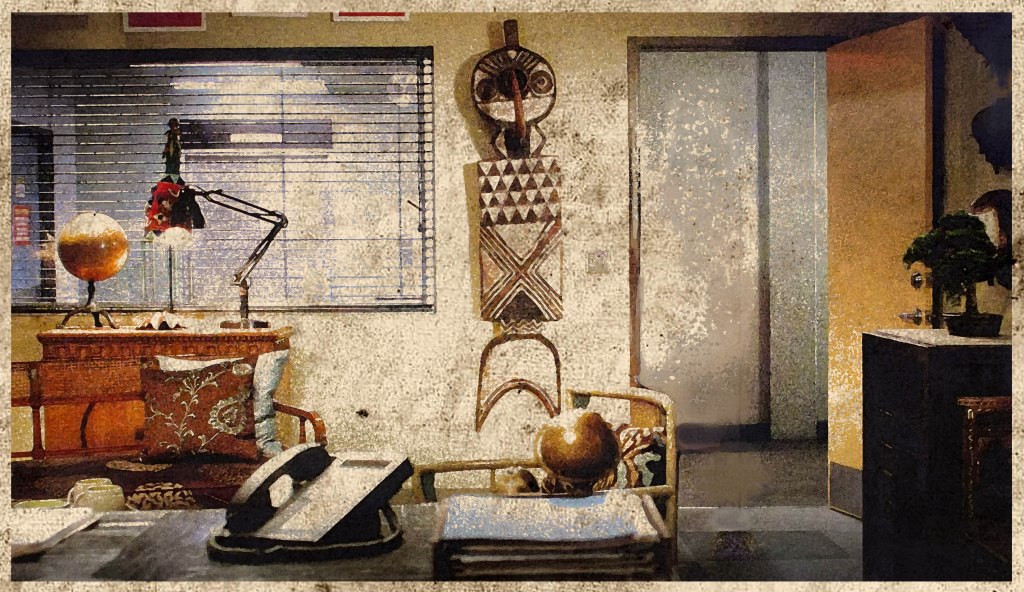
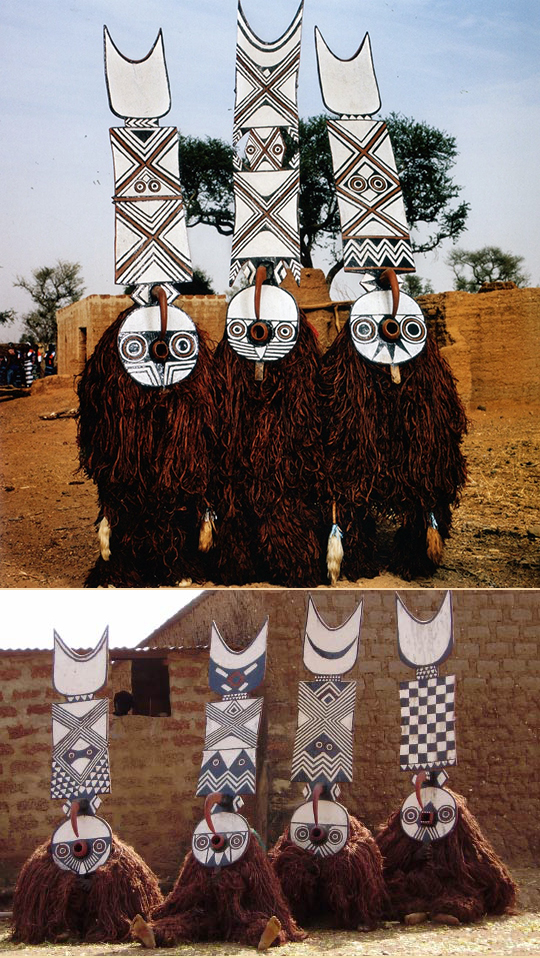
In a popular ‘odd couple’ police series, a Bwa Nwantantay mask hung upside in the office of a worldly Medical Examiner. There it stayed, standing on its crown for six of seven seasons. Its bizarre inversion was never the source of mysterious mishaps or disruptions in the TV scientist’s life…nor of any other plot point in the series. In fact, the inauspicious display of this sacred object was never mentioned or explained, leaving viewers to conclude that (a) the fashionable M. E. was merely a pretentious neophyte who knew little about African art or (b) the TV show was not as smart as the doctor it was trying to portray.
Members of the Bwa ethnicity of Burkina Faso (as well as their neighbors the Bobo and Mossi) perform their plank masks at agricultural festivals, funerals, and initiations. The masks typically represent animals and ancestors in an advanced program of visual abstraction, augmented further by boldly contrasting motifs representing water, cultivated fields and other aspects of the prosperous agro-cycle. In Bwa/Mossi/Bobo abstraction, a disembodied beak might serve as a metonym for an all-seeing raptor or industrious hornbill and a pair of wings, an auspicious butterfly. What catastrophes should befall a character who turns these benevolent symbols upside down?

Is the African mask in your expert’s office upside down?

(like a crucifix in a horror movie?)

An expert or serious collector would know how the mask was worn and what it means, and therefore would know which end is up.

Hanging a Nwantantay plank mask upside down is not only a sign of cultural illiteracy and therefore out-of-character for a learned aesthete, it invites ill omens from the nature spirits represented by these masks.  

In a legendary pulp action adventure, all hell breaks loose when the treasure-hunter removes a golden artifact from its boobytrapped pedestal in an Amazonian temple…But while the temple interior does sport some elements from upriver cultures in the frigid Andes, the artifact itself is not even South American nor is it authentic to any pre-Columbian culture. Rivaled only by the Maltese Falcon in film fame, the Golden Idol is in fact a movie copy of a stone artifact once believed to be Aztec but now known to be a fake.
A blockbuster film might inspire a generation of young archaeologists while also misinforming a hundred times as many members of the viewing public. The result is, on one hand, a bumper crop of inspired young scholars contributing new findings (albeit locked away in academia) while, on the other hand, the general public becomes more ignorant or confused about the ancient Americas (e.g., thinking the Aztec Sun Stone is “a Maya calendar,” and that the Inka, Maya and Aztec all were “tribes”)
Instead of a gold fake of a stone fake from Mexico, what if a South American gold figure were the dingus after which the famous archaeologist was questing? Although the sacrificial tumi knife from the Sicán culture of Peru (top) and the bat-masked figure pendant from the Tairona of Colombia (bottom) both hail from the Andean highlands some 700-1000 years ago, it makes far more sense that these objects might be found in a hidden temple in the Amazonian foothills of the Andes. Not only are they even more spectacular than an egg-shaped Mexican birthing figure, but the act of squeakily un-wedging the tumi from a slot in the stone pedestal while/and replacing it with a bowie knife might add another adventure to the plot (the archeo-swashbuckler might need that knife later!).

Is your Amazonian ‘idol’ actually from Mexico?

(and based on an infamous fake at that!)

It’s a long way from the wood and mud brick cities of the Amazon to the stone temples of Aztec Tenochtitlán (roughly the distance from Nigeria to Norway), and the 1,000 different Indigenous cultures in between are not interchangeable.

Native peoples of the Americas comprised vast, multi-ethnic empires, splendiferous kingdoms large and small, powerful city states, grand confederations, large tribes, and small nomadic bands.

From their distinctive style and the materials and technology by which they were made, an archaeologist, anthropologist or art historian would be able to attribute artifacts to their respective cultures and regions.  
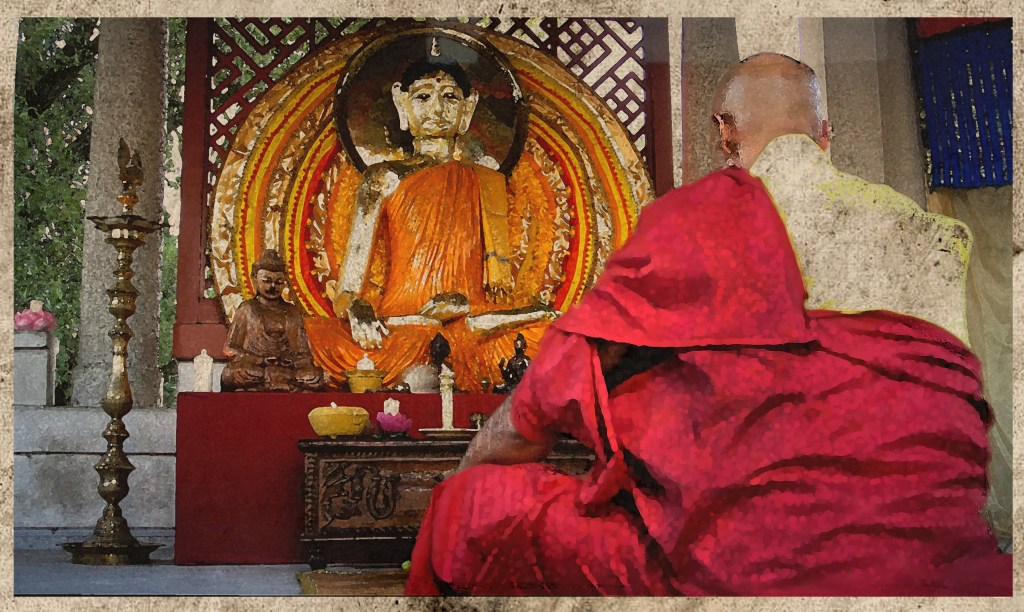
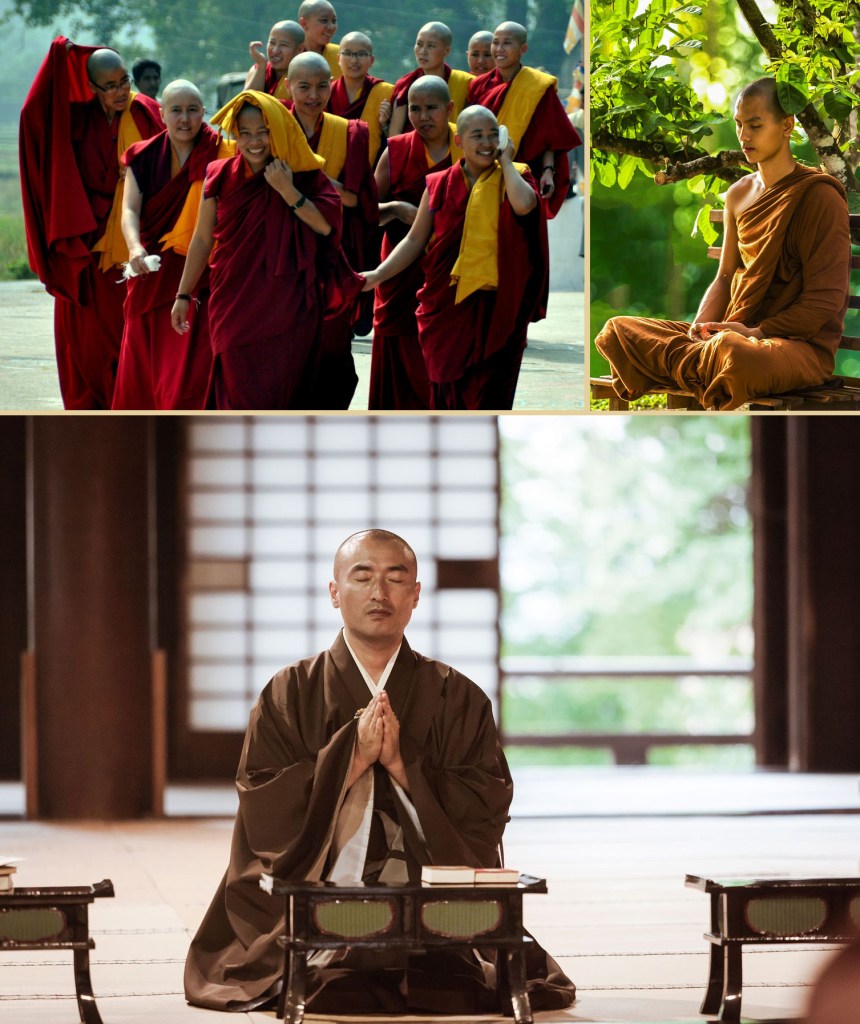
Although they took the trouble to film in Sri Lanka, the producers of a popular TV spy drama made the common Hollywood error of dressing the local sangha (clergy) in the wrong robes. In the process of scouting locations, crew members must have seen actual Sri Lankan monks and yet, the wardrobe department provided the actors with Himalayan robes from 2,000 miles away. Additionally, the altar in the Buddhist monastery scene is a hodgepodge of mismatching and ill-positioned Buddha statuettes and the large statue is an entirely made-up object with no stylistic affiliation and hands in the wrong mudra (gesture). The mudras of Buddha statues are as specific as any word or phrase in American Sign Language and a Buddha statue’s right hand is never allowed to just dangle off its knee in the manner seen here. Set Design has misunderstand this hand. It should have its fingers extended downwards in bhumisparshamudra (earth-touching mudra signaling the Buddha’s moment of enlightenment) rather than partially curled at ease.
The bald heads and simple robes worn by Buddhist sangha (clergy) members on a daily basis are a symbol of their renunciatory vows and lifestyle. In ancient times, monks collected rags to make their robes, bleaching, then dyeing them a uniform color in the brown-to-orange-to-red range before sewing them together into lengths of cloth for making robes. The Theravada branch of Buddhism (upper right) practiced in Sri Lanka and much of Southeast Asia is the oldest surviving of the religion’s three branches. Its monks wear a brownish saffron color derived from a dye that is easy to obtain. Mahayana Buddhist nuns and monks from Japan (bottom), Korea, and China wear robes in black, gray or brown except on very formal occasions when their robes range from orange to blue depending on their denomination. Unlike their counterparts who wear cotton robes, Himalayan monks and nuns (top left) wear heavier wool robes dyed a deep maroon over an orange or yellow cotton undershirt. The robes of each school and sect of Buddhism are no more interchangeable than those of a country’s army, navy and air force. How many plot intrigues can be derived from this clear denominational difference?

Are your Sri Lankan or Thai monks wearing Tibetan robes?

(and dying of heatstroke!)

There are three major schools of Buddhism, each with its own history, regalia, art style, rituals, and sacred texts. Conflating these schools is like mixing up Baptist ministers and Catholic bishops.
A film can hinder, harm or honor the audience.

As the Watchmen television series, the Black Panther and Shang-Chi films, and generations of Star Trek have proven, the motion picture industry has a major effect on cultural awareness and on the shape (and color) of the popular imagination. As they entertain, filmmakers are in the powerful position to inform or misinform, to inspire or undermine their audience.

The Four Rivers Circle believes that if the marvelous peoples, inventions, and events of the pre-Columbian, African, Asian, Caribbean and Latin American spheres are more accurately incorporated into plots, sets, dialogue and character development, they can increase the theatricality of film productions.

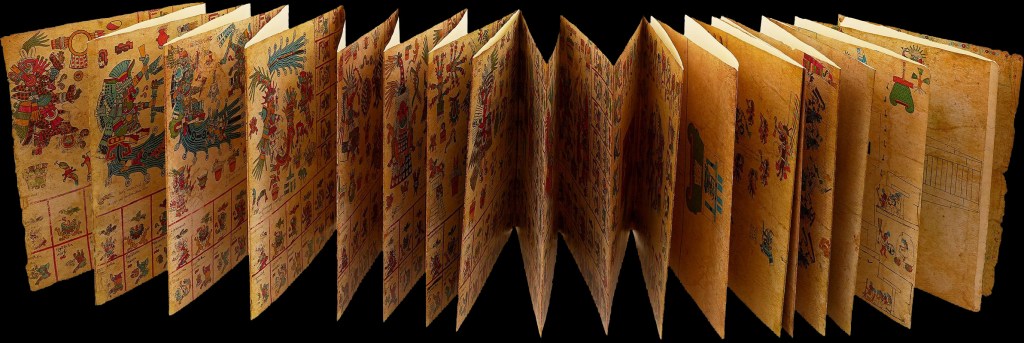
Pictured at right: a facsimile of an Aztec calendrical manuscript popularly known as the Codex Borbonicus. In fact, Mexica (Aztec) books were not constructed in the codex format (pages bound by a spine). Rather the Mexica tlacuilo (scribe/painter) produced illustrated texts from long sheets of amatl (bark paper) paginated in the accordion-fold format.

Consultations

Are your Pueblo Indians dressed like Plains Indians? Do your Old Kingdom Egyptians look like they’re from somewhere between Bristol and Baghdad or between Abydos and Aswan?

From independent films to studio epics, we can help. There is no reason the cultural consulting on the Moana cartoon should leave your project in the dust or all at sea!